● Custom Shirts
Made-to-measure shirts, cut in Bangtao
These are shirts cut to your measurements — tailored, not printed — with the collar, the cuff, the body and the length decided by you rather than by a size. They are made on the premises in Bangtao Beach, Phuket, from ฿1,500, and they are one of everything we make and alter.
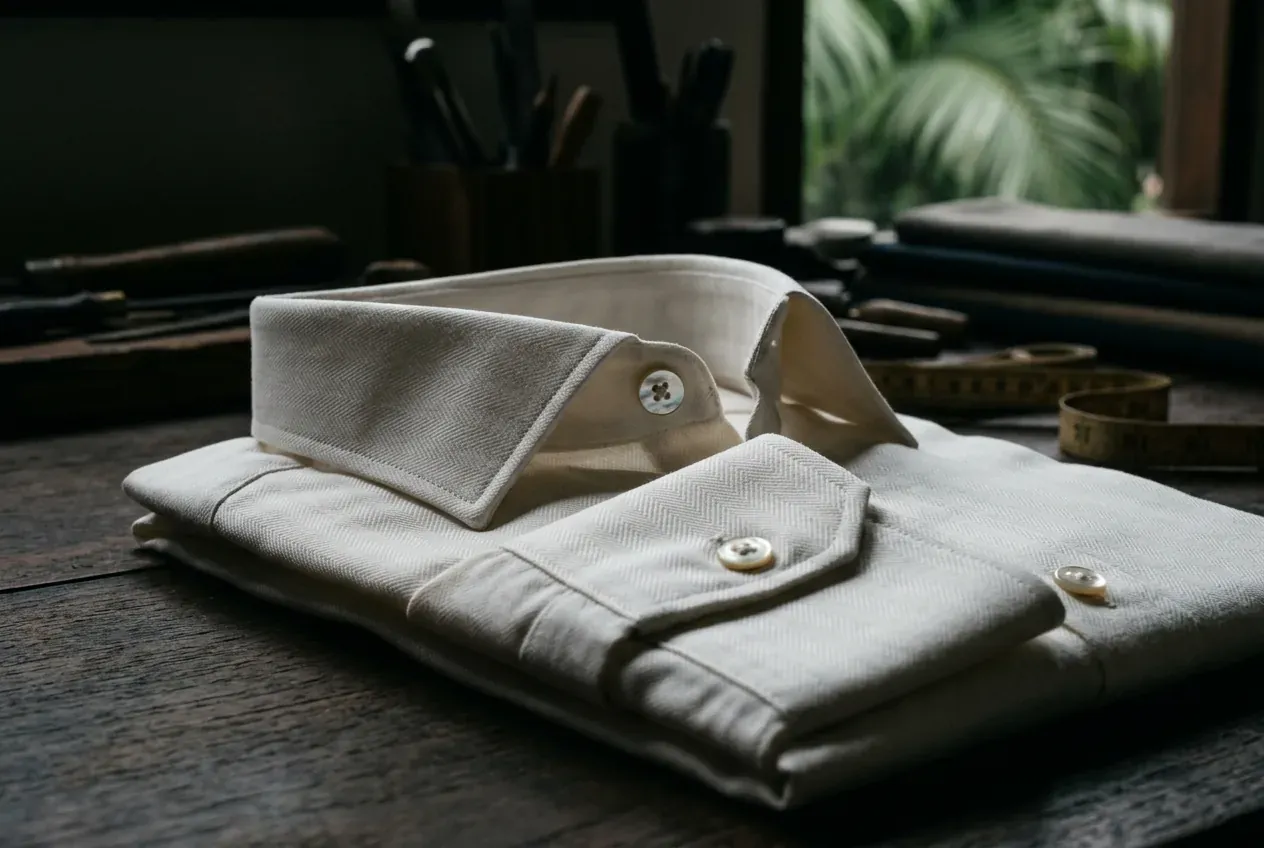
● The Detail /01
A shirt is the garment people wear most and think about least. It is also the cheapest thing in tailoring to get right, which makes it the sensible first commission for anyone unsure whether any of this is worth it.
What follows is where a bought shirt actually fails, the two decisions that matter most, and what the cloth has to do in this climate.
Where a bought shirt goes wrong
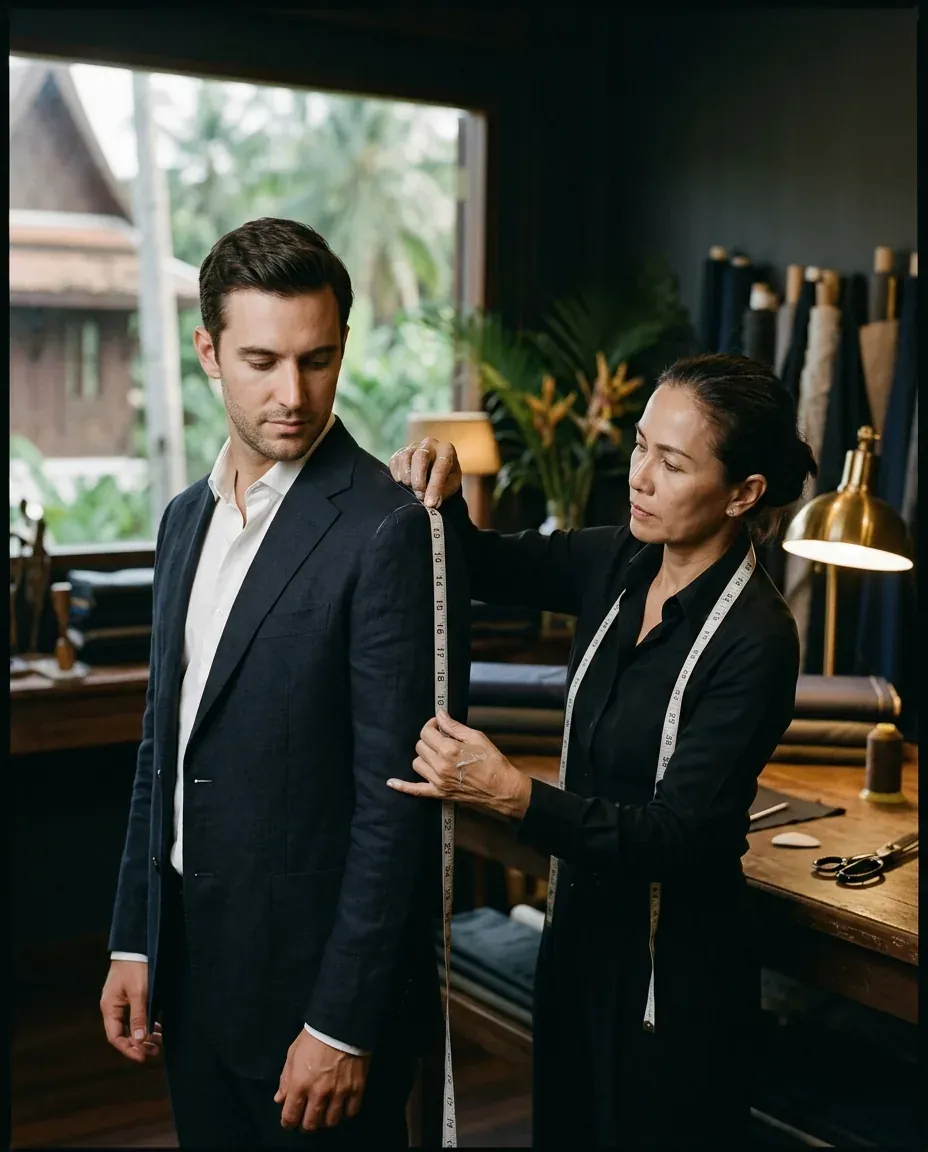
A shirt is sold on one number, the collar size, and that number describes one measurement out of the six below that decide whether it fits. These are the places it fails.
- Collar circumference. The number on the label is measured at the band, and makers differ from one another — so your size is a starting guess rather than a measurement.
- Shoulder point. The seam should land on the bony point of your shoulder. Inboard means the shirt pulls when you reach forward; hanging down the arm means the sleeve bunches at the armhole. This one cannot be corrected afterwards.
- Body width. Off-the-peg assumes a fixed relationship between neck and chest. If yours differs, a shirt that fits the collar billows at the waist or pulls at the buttons.
- Sleeve length. Sold in one or two lengths per collar size, which is not enough. A cuff that slides over your hand is the commonest visible fault.
- Body length. A shirt long enough to stay tucked is usually too long to wear out, and most shirts are cut to do neither properly.
- Yoke and posture. A collar that stands away at the back is not a neck-size problem; it is a shirt cut for a different posture.
Each of those has a test you can run on a shirt you already own, and they are set out in order in how a shirt should fit — including which failures a tailor can correct and which mean the shirt is simply the wrong shirt.
Collars and cuffs
A shirt is mostly its collar. It is the part at eye level, the part a jacket frames, and the only part that changes how the whole garment reads. These are decisions rather than upgrades, and they cost nothing.
- Point collar. Narrow spread, longer points. Lengthens a round face and suits a narrow tie or none at all. The conservative default.
- Semi-spread. The most versatile of the four, and the one that works with the widest range of ties and with an open neck.
- Cutaway or spread. Points angled well apart. Broadens a narrow face, needs a tie with some bulk to fill it, and looks deliberate open-necked.
- Button-down. Casual by convention, softer in the roll, and the right answer on an Oxford cloth or a linen shirt worn without a jacket.
- Collar height and stiffening. A taller band shows more above a jacket collar; a softer interlining reads relaxed and a firmer one holds a tie knot upright.
- Barrel cuff. One or two buttons, the everyday choice, and adjustable if the second button is set for it.
- French or double cuff. Folded back for links. Formal, and worth having on at least one shirt if you own links.
- Cuff depth and taper. Deeper cuffs suit longer arms; the cuff should stay put when you drop your arm and still take two fingers.
Cloth for this climate
A shirt sits against the skin, so weave matters more here than on any other garment. What you want is a cloth that lets air through rather than one that merely feels thin in the hand.
Plain-weave cottons — poplin and broadcloth — are smooth, crisp and the standard choice, and a lighter weight in an open weave beats a heavier one every time in humidity. Oxford is thicker and more textured, breathes well, and reads casual. Linen and linen-cotton blends are the coolest of all and crease immediately, which on a shirt reads as appropriate rather than untidy in a beach town. Twills and heavy dobbies look good on the roll and are the ones to avoid, because a dense weave holds heat against you regardless of the fibre.
Pale colours reflect rather than absorb, which is a real difference outdoors at midday rather than a styling preference. The same weight-and-weave argument applied to jackets is in which cloth handles the heat.
How long it takes
Most pieces here are ready in 24 to 48 hours over two to three fittings, and shirts sit at the quick end of that because there is less structure to decide. The busy months change how easily the appointments can be booked rather than how long a garment takes. A first shirt normally means one measuring session and one fitting; once the pattern exists, further shirts need neither.
That is the reason to order more than one. The measuring is the part that takes time, and it is done once. If you are here on a short trip, come in during your first days rather than your last — and your pattern stays on file afterwards, so a second batch can be ordered from home.
What it costs
The row below is the starting figure for a made-to-measure shirt, before any cloth above the standard books.
| Custom shirt | from ฿1,500 |
That is the published starting figure, and what moves it is the cloth rather than the making. A heavier or finer cotton, a linen, or a cloth from further up the books costs more; the collar, the cuff and the fit decisions cost nothing extra, because they are decisions rather than upgrades. Several shirts ordered together are quicker to make than the same shirts ordered separately, since one measuring session covers them all. Starting figures for everything else are on what a garment costs here, and the quote is confirmed before anything is cut.
Order one
Send your dates and what you want made. We confirm what is realistic in the time you have before you commit to anything.
● Good to Know /03
Common questions
Can I get clothes made in Thailand?
Yes, and shirts are the easiest place to start. They need fewer fittings than a jacket, they are quick to make, and the fit is simpler to judge on the body. If you are unsure whether made-to-measure is worth it at all, one shirt answers the question for a fraction of what a suit costs and tells you a great deal about how a shop works.
Is Phuket good for clothes shopping?
For having things made, yes, particularly with several days and a clear idea of what you want. For buying finished clothes off a rail it is unremarkable. Shirts specifically are worth having made here rather than bought, because the cloths carried are chosen for heat and humidity rather than for a temperate summer, and that is not something you can correct after the fact.
Is it worth getting a tailored suit in Thailand?
It is worth it if you plan around the fittings rather than around the shopping, and the same logic applies to shirts with a shorter timeline. A garment cut for you needs measuring and at least one fitting, so how many days you have decides more than the shop’s speed. Shirts fit comfortably into a short trip where a canvassed suit would not.
How to take measurements for a men’s suit?
Chest at the fullest point with the tape level and arms down, natural waist at the narrowest part of the torso, seat at the widest part, sleeve from shoulder bone to wrist bone with the arm slightly bent, and inseam taken from a trouser that already fits. For shirts specifically, add the neck at the base and the shoulder point to point — and have someone else do the shoulder, because it cannot be taken accurately on yourself.
What is the difference between made-to-measure and bespoke?
Made-to-measure starts from an existing pattern and alters it to your measurements. Bespoke drafts a pattern from nothing, with more fittings and more handwork. For shirts the gap between the two is narrower than it is for jackets, because a shirt has fewer structural elements to get wrong, which is why a made-to-measure shirt is often the cheapest way to find out whether tailoring is worth it to you.
Is tailoring cheap in Thailand?
Cheaper than the equivalent work in Europe or North America by a wide margin, and shirts show it most clearly, since a made-to-measure shirt here often costs less than a good off-the-peg one at home. Cheap in absolute terms, no. A figure far below the published local range is usually buying a thinner cloth and a single generic pattern rather than a saving on the same object.
● What Clients Say
- ★★★★★
“Very nice suits and professional measuring. My suits were ready in 4 days so don’t think you have no time left to get a nice custom suit.”
Enes Ergor · Read on Google ↗
- ★★★★★
“Amazing service and fast turn around especially over the holiday period. Highly recommended.”
Colin W · Read on Google ↗
- ★★★★★
“Fabulous service! I met Mike and Chris on my way to one of the beach clubs. They were both very relaxed and pleasant. I hadnt planned to have anything made but they encouraged me. They were not pushy at all which I liked. I ended up with a suit and a pair of trousers for work.”
Maxine Braddock · Read on Google ↗
Book custom shirts in Bangtao, Phuket
The Outfit Custom Tailor
334, 42 Bang Tao Beach, Choeng Thale
Phuket 83110, Thailand
081 444 6362 ·
hello@outfitcustomtailor.com
Daily · closes 11 PM
● Also From The Outfit
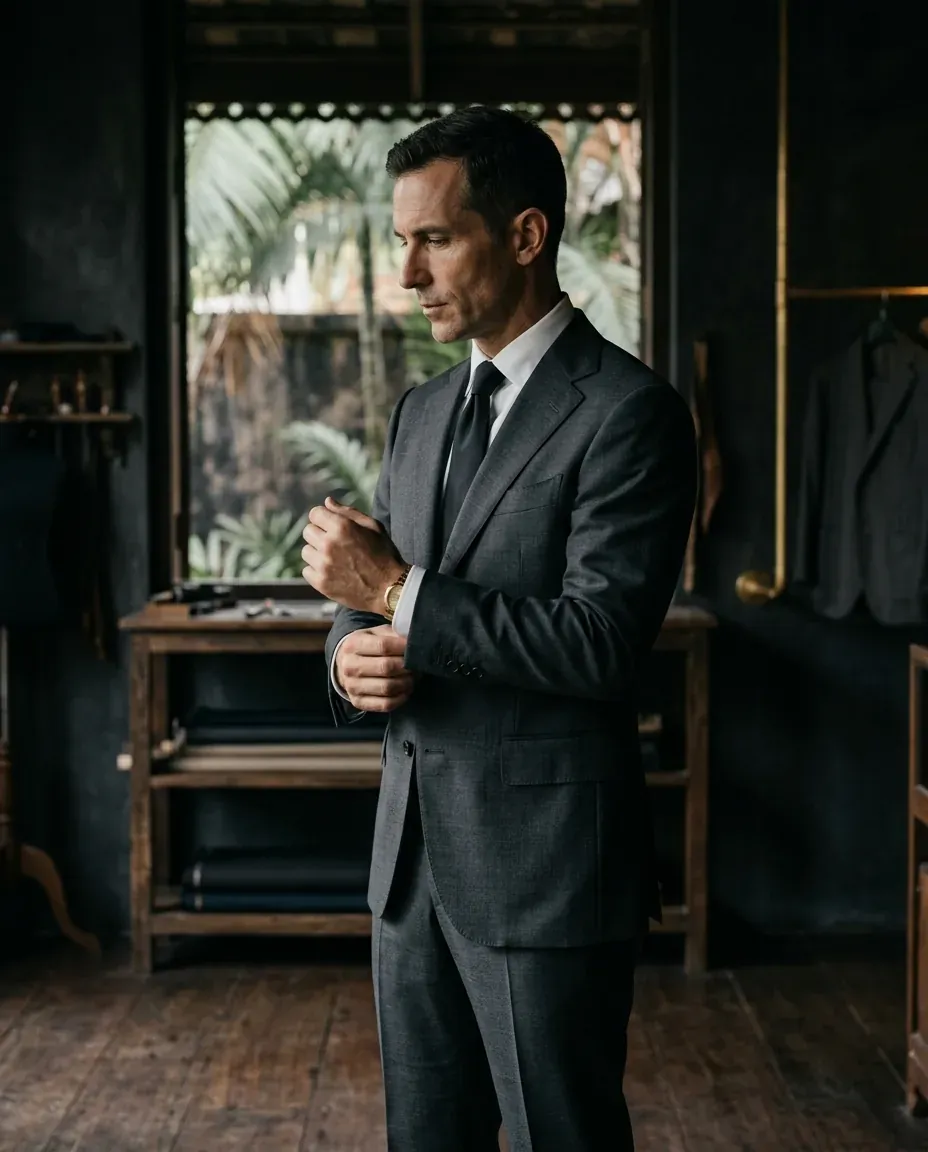
Custom Suits
↗Made-to-measure suits for business, formal and everyday, fitted to your exact measurements.
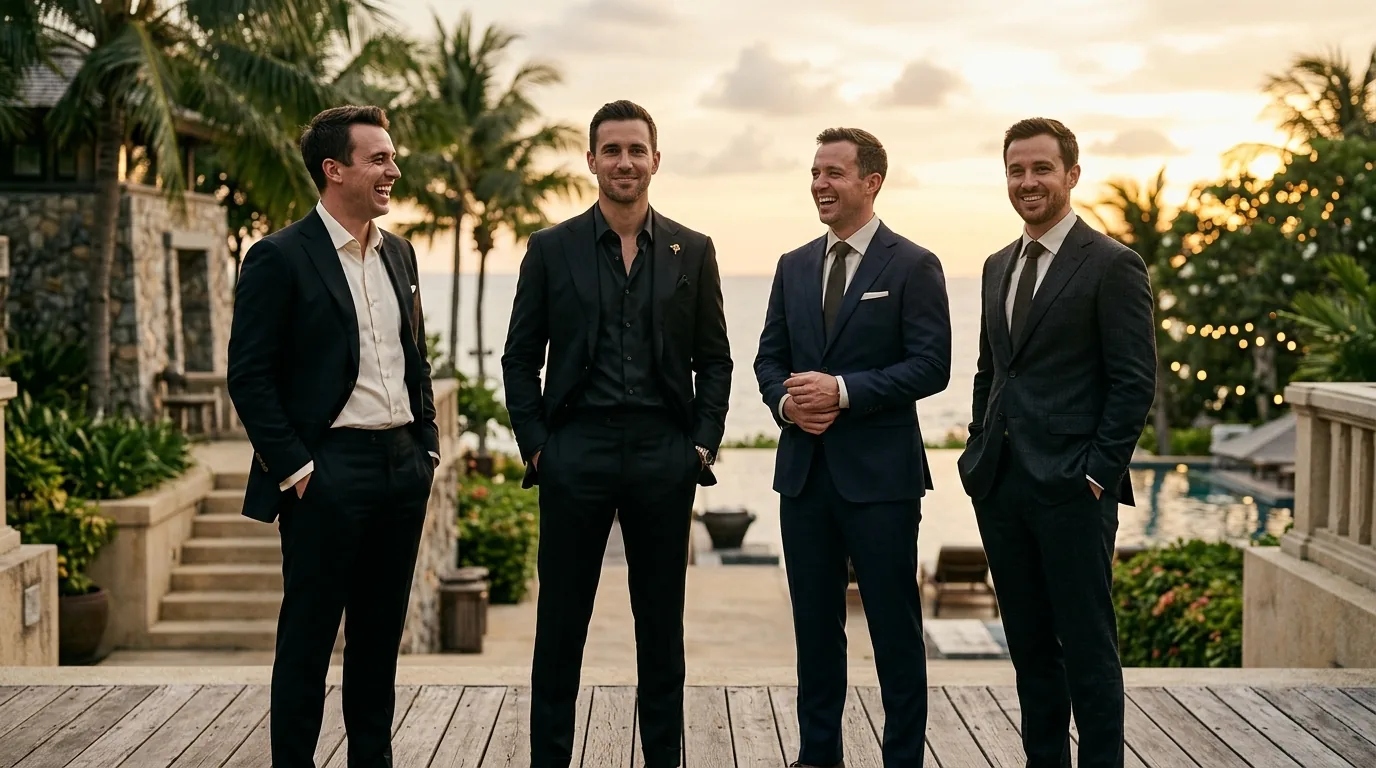
Wedding Suits
↗Groom and groomsmen suits, matched across the party and fitted at your villa or hotel.
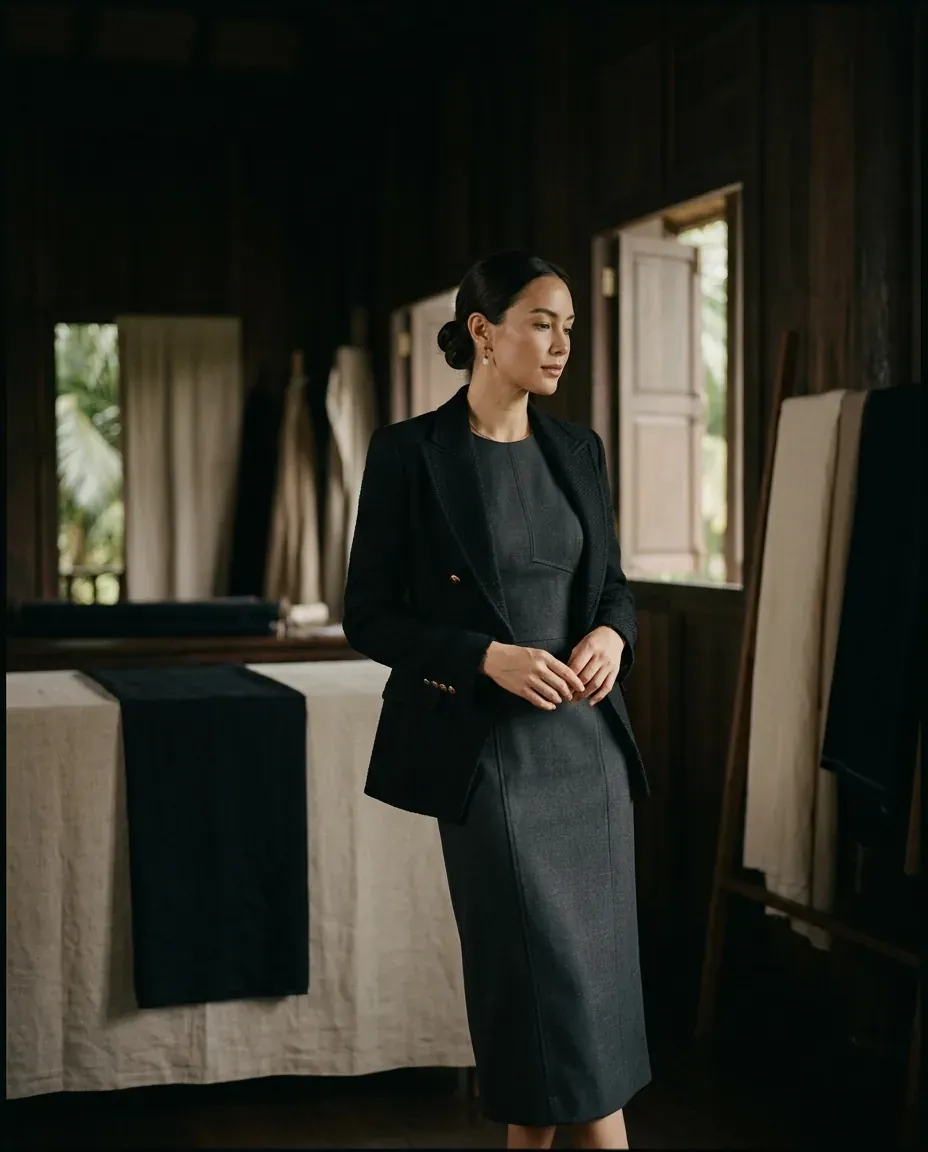
Women's Tailoring
↗Bespoke dresses, ladies’ suits and occasion wear, tailored to your shape.
Ready for your perfect fit
Message us on WhatsApp to book a fitting at our Bangtao shop, or at your hotel across Bangtao, Cherngtalay, Laguna and Surin.